What Records Do Tradies Need to Keep for Their Bookkeeper?
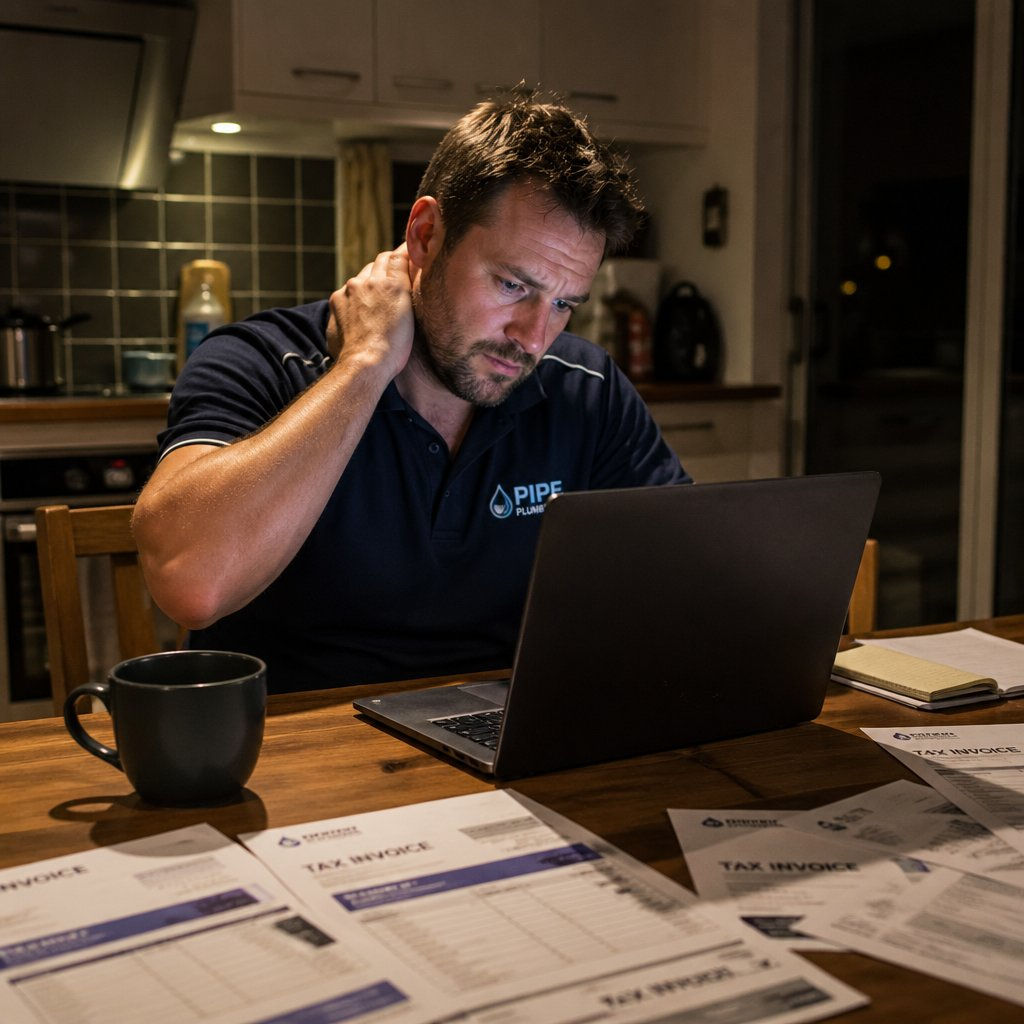
You've been out on the tools all week. You've completed jobs, ordered materials, paid suppliers and hopefully had a few invoices paid along the way.
You've got Xero connected to your bank account, so the transactions are coming through automatically. Surely that's enough for your bookkeeper to get everything sorted?
Not quite.
Your bank feed tells your bookkeeper that money has moved. It doesn't always tell them why it moved, what you purchased, whether GST was charged or whether the transaction needs to be treated differently.
And that's where the paperwork comes in.
Running a trade business isn't just about getting the jobs done. There's also the money coming in, the money going out, the bills waiting to be paid and the paperwork sitting somewhere in the ute, your inbox or the office.
You don't need to become a bookkeeper to manage your business well. But knowing what information to keep and why it matters can make a real difference to how smoothly your business runs.
1. Your bank feed doesn't tell the whole story
A bank feed is a great tool. It saves time and means you don't have to manually enter every transaction into Xero.
But imagine your bank feed shows a payment of $480 to a supplier.
Your bookkeeper can see the amount, the date and the supplier's name. But what did you actually buy?
Was it materials for a job? New tools? Parts for the ute? Something that was partly for business and partly personal?
Without the receipt or supplier invoice, there's often no way to know for certain.
That's why you need to keep receipts and invoices for your business purchases, including:
- Building materials and supplies.
- Tools, equipment and machinery.
- Fuel, vehicle repairs and maintenance.
- Protective clothing and safety equipment.
- Subcontractor invoices.
- Office supplies and other business expenses.
These documents help your bookkeeper understand what the transaction relates to, record it correctly and determine whether GST credits may be available.
A couple of things tradies often overlook
Subcontractor invoices
If you're paying subcontractors, make sure you keep their invoices. Ideally, these should include their details, ABN, a description of the work performed and the amount charged.
Your bookkeeper may also need to check whether the subcontractor is registered for GST before claiming a GST credit.
Vehicle registration renewals
If you're in Queensland, don't just keep the payment receipt for your vehicle registration. Keep the complete registration renewal notice.
The registration payment includes different components, and the GST treatment isn't the same for the entire amount. The CTP insurance component may include GST, while the other registration components are generally GST-free.
Your bookkeeper needs the full notice to identify and correctly account for the GST component of the CTP insurance.
It might only be around $20 in GST on a $900 registration renewal, but why miss out on a GST credit you're entitled to claim?
Small amounts add up over time.
2. Where should you put all those receipts?
Let's be honest. You're probably not going to sit down every afternoon and neatly file every receipt.
And you don't need to.
The best record-keeping system is one that's simple enough for you to actually use. If it takes too much effort, chances are it won't last.
Here are a few ways to keep your paperwork under control:
- Snap paper receipts with Google Drive. Use the built-in document scanner inside the Google Drive mobile app to turn paper receipts into clean, searchable PDFs. Instead of letting them fade in your wallet, snap a photo on the spot and save it straight to a dedicated cloud folder.
- Automate the heavy lifting with a receipt-capture app. Tools like Hubdoc or Dext let you snap, email, or forward receipts into one central hub. They automatically extract key details—like the supplier, date, and GST—and sync them directly with your accounting software.
- Create a dedicated inbox folder for digital bills. Don’t let emailed supplier invoices get buried in your inbox. Set up a specific "Receipts & Invoices" folder (or an automatic email rule) so every digital bill lands in one easy-to-find spot.
- Keep your folder structure simple. You don’t need an elaborate filing system to stay compliant. Grouping your digital records by month or BAS quarter is usually all you need to make ATO compliance painless.
The important thing is that your bookkeeper can access the documents when they're needed.
Imagine sitting down to get your BAS sorted and not having to search through emails, glove boxes, office drawers and the bottom of your toolbox for that one missing receipt.
That's what a simple system can do for you.
3. Some purchases need more than just a receipt
Not every transaction in your business is straightforward.
Your Xero bank feed might show a $15,000 payment to a vehicle dealership, but that doesn't tell your bookkeeper whether you've bought a vehicle outright, paid a deposit or entered into a finance arrangement.
The same applies to other transactions that may need a little more explanation.
Keep the supporting paperwork for things such as:
- Vehicle or equipment purchases.
- Finance agreements and loan repayments.
- Insurance claims and reimbursements.
- Purchases that are partly business and partly personal.
- Refunds and unusual deposits.
Your bookkeeper may need an invoice, finance agreement, statement or even a quick explanation of what happened.
You don't need to work out how the transaction should be recorded. That's part of your bookkeeper's job.
But providing the information helps them get it right.
4. What happens when you buy something using your own money?
It happens all the time in trade businesses.
You're at the wholesaler, you grab a few things for a job and pay using the wrong card, your personal card instead of your business card. Or you pay for something in cash. Maybe you use a different bank account that isn't connected to Xero.
The problem is that those transactions don't automatically appear in your Xero file.
If your bookkeeper doesn't know about them, they may never be recorded.
That means your business expenses could be understated, and you may miss GST credits you could otherwise be entitled to claim.
Whenever you pay for a business expense outside your usual business bank account, keep the receipt and let your bookkeeper know.
It's a small step that helps ensure your business records reflect what actually happened.
5. If you've got employees, keep your bookkeeper in the loop
When you're running a business with employees, there are more things to keep track of than just your own income and expenses.
Your bookkeeper needs to know when things change.
Let them know when an employee:
- Starts or finishes employment.
- Changes their hours or pay.
- Takes leave that needs to be processed.
- Has another change that may affect payroll.
If someone is leaving, don't wait until the last minute to tell your bookkeeper.
Their final pay may involve unused annual leave or other entitlements that need to be calculated and processed correctly.
A quick phone call or email before the change happens can save a lot of last-minute scrambling.
6. Why does your bookkeeper keep asking you questions?
You've sent your invoices, uploaded your receipts and connected your bank feed.
Then your bookkeeper sends you another message.
"What's this payment for?"
"Is this a business expense?"
"Who was this deposit from?"
"Is this a loan repayment or a purchase?"
It can feel like you're being asked to do more work, particularly when you're already busy.
But your bookkeeper isn't asking questions just to make your life harder.
They need to understand what's happening in your business to keep your records accurate. Guessing isn't good bookkeeping, and transactions that aren't properly understood can affect your BAS, GST reporting and the financial information you rely on to make decisions.
The quicker you respond, the quicker your bookkeeping can be completed.
And the more regularly your bookkeeper works with your records, the less likely you are to be dealing with a pile of unanswered questions when your BAS is due.
7. Mixing business and personal money makes things harder
If you've ever paid a personal expense from your business account or a business expense from your personal account, you're not alone.
But the more you mix the two, the harder it becomes to understand what's actually happening financially in your business.
Your bookkeeper has to separate business transactions from personal ones, work out how certain payments should be recorded and sometimes ask you to explain transactions that could otherwise have been avoided.
Having a dedicated business bank account and business card makes this much easier.
It also gives you a clearer picture of your business finances.
When you look at your bank balance, you want to know what's happening with your business money — not have to work out how much of it relates to personal spending.
If you do use personal funds for a business purchase, that's fine. Just keep the receipt and let your bookkeeper know.
8. How long do you need to keep your business records?
In Australia, the ATO generally requires businesses to keep most tax and business records for at least five years, although the time period can depend on the type of record and the circumstances.
If you employ staff, there are additional record-keeping requirements. Under Fair Work rules, employers generally need to keep employee time and wage records for seven years.
Records you should keep include:
- Sales invoices and supporting documents.
- Supplier receipts and invoices.
- Bank statements.
- GST records and BAS information.
- Business asset purchase and finance documents.
- Payroll and employee records.
- Documents supporting business expenses and claims.
You can generally store your business records electronically, provided they're accessible, legible and can be produced when required.
For more information, visit:
ATO – Record keeping for business
Fair Work Ombudsman – Record keeping
9. Do you need to send everything to your bookkeeper again?
No, not necessarily.
If your bookkeeper already has access to your Xero file, you generally don't need to resend information that's already correctly recorded and accessible.
For example, you may not need to send:
- Sales invoices already entered into Xero.
- Bank transactions coming through your connected bank feed.
- Documents already uploaded and accessible in Xero.
However, your bookkeeper may still need supporting receipts, additional information or clarification about particular transactions.
The best thing you can do is agree on a process with your bookkeeper so you both know what's required, where documents should be stored and when they need to be provided.
Good bookkeeping isn't about paperwork. It's about understanding your business.
You didn't start your trade business because you love chasing invoices, sorting receipts or working out GST.
You started because you're good at what you do.
But earning money and understanding where that money is going are two different things.
You can have jobs booked in, customers paying their invoices and plenty of work on the go, but still find yourself wondering where the money has gone when the bills, wages, GST and other expenses start coming out.
That's where having organised bookkeeping makes a difference.
Keeping your records up to date isn't just about getting your BAS lodged. It helps you understand what's happening behind the work you're doing, gives you a clearer picture of your business finances and makes it easier to make informed decisions.
You don't have to manage all of that yourself.
At Speaking Numbers, I help Logan tradies and small businesses take the bookkeeping off their plate.
As a registered BAS Agent, I provide practical Xero bookkeeping and BAS support to help you keep your records organised, understand your business finances and stay on top of your bookkeeping.
Because you should be spending your time getting the jobs done, not chasing paperwork.
Let's make bookkeeping one less thing on your to-do list.